Wadi Al-Aqeeq – The blessed valley
Wadi Al-Aqeeq, known as the Blessed Valley by Prophet Muhammad (PBUH), holds a special spot in Islamic history. Sitting on the western edge of Madinah, Saudi Arabia, it carries deep meaning for the Arabian Peninsula’s faith and culture. This valley isn’t just any place; it’s bursting with stories and roots that shaped a civilisation. Imagine walking through a land where every corner shares whispers of the past, blending faith, nature, and history like a living tapestry. History lovers and curious travellers hungry for a glimpse of sacred heritage find Wadi Al-Aqeeq truly one of a kind. Dive in to uncover the secret treasures and timeless tales hidden in this astonishing valley.
What Is the Wadi Al-Aqeeq?
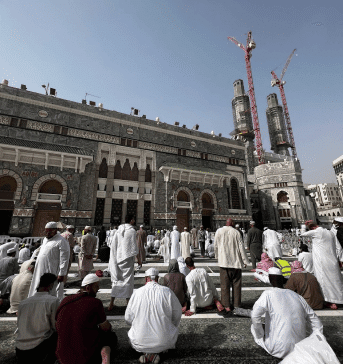 The term Al-Aqeer literally means “Quartz” in Arabic. Prophet Muhammad (PBUH) referred to Wadi Al-Aqeeq as “The Blessed Valley.” Located on the ancient pilgrim and trade routes, the Valley of Al-Aqeeq beholds great significance in Arabian history.
According to Islamic history, several places were built on the banks of Wadi Al-Aqeeq, especially during the Abbasid and Umayyad eras. In fact, it wasn’t uncommon to see farms, orchards, and large houses in the region of Wadi Al-Aqeeq.
Out of the many palaces built on the valley, some of them are said to have belonged to the family members and companions of Prophet Muhammad (PBUH), including Urwah bin Zubair (RA). Located in Madinah, the Urwah well is a prominent well built on Wadi Al-Aqeeq with the intent to draw water from Jabal Eir in order to supply water to the local citizens.
Notable landmarks nearby Wadi Al-Aqeeq include:
- Miqat Dhul Hulaifah Masjid – It is situated at the western side of Wadi Al-Aqeeq, at a distance of 12 kilometers from Masjid-e-Nabawi. Miqat Dhul Hulaifah Masjid is also known as Masjid Miqaat.
- Masjid Mu’aras is a small historical mosque situated near Masjid Meeqat, Dhul Hulaifah. According to Islamic history, Masjid Mu’aras is built on the place where Prophet Muhammad (PBUH) used to stay for the night on his way back to Makkah. Nothing except for the raised platform remains of the Holy Masjid.
- Jabal’Ayr – Located at a distance of 7 kilometers away from Masjid-e-Nabawai, Jabal’Ayr is a mountain that holds great strategic importance. It is also known as the mount from hell.
The Messenger (PBUH) of Allah SWT said, “Uhud is a mountain which loves us and which we love, it is upon the Gate of Heaven,” adding, “And Ayr is a place which hates us and which we hate, it is upon the Gate of Hell.”
Where Is the Wadi Al-Aqeeq Located?
Wadi Al-Aqeeq is considered one of the most sacred valleys in Islam and the longest valley in Hijaz. It is located in the western region that is 30 kilometers from the South of the modern city of Madinah, Saudi Arabia. Wadi Al-Aqeeq begins in Taif and runs through Madinah before coming to an end at Khulaly, a dam situated at the north of Madinah. The entire Wadi Al-Aqeeq is around 52 kilometers long. It is located at a distance of 432.6 kilometers from Makkah.
Significance in Islam
On stating the significance of Wadi Al-Aqeeq, Hazrat Umar (RA) said, “While the Prophet Muhammad (PBUH) was in Al-‘Aqeeq, he said, “Someone (meaning Gabriel) came to me from my Lord tonight (in my dream) and said, ‘Offer the prayer in this Blessed Valley” [Sahih Al-Bukhari]
In another place, Hazrat Sa’ad bin Abi-Waqqas (RA) narrates, “We were with the Prophet Muhammad (PBUH) at the Mu’arras, and he said, ‘Someone came to me saying, “You are in the Blessed Valley!”’ [Sahih Al-Bukhari]
Hazrat Abdullah bin ‘Umar (RA) narrated: While the Prophet Muhammad (PBUH) was passing the night at his place of rest in Dhul-Hulaifa in the bottom of the valley (of Aqeeq), he saw a dream, and it was said to him, “You are in a blessed valley.”
Many companions of Prophet Muhammad (PBUH) highly regarded Wadi Al-Aqeeq. Soon after Prophet Muhammad’s (PBUH) departure from the world, several companions constructed their own houses around Wadi Al-Aqeeq, including the renowned Castle of Urwah bin Zubair (RA) and houses of Hazrat Saad bin Abi Waqas (RA), Marwan bin Al-Hakam (RA) and Syeda Sakina bin Al-Hussain (RA).
According to Islamic history, it is also believed that during the Caliphate of Hazrat Umar (RA), the floor of Masjid An-Nabawi (Prophet Muhammad’s (PBUH) mosque) was covered with soft stones from Wadi Al-Aqeeq. Some historical references have also confirmed that the water which flows through Wadi Al-Aqeeq is sweet in taste. It is believed to have been formed by a fissure near Madinah and is abundant with water in the winter months.
What Is the Castle of Urwah bin Zubair?
Otherwise known as Qasr Urwah, the Castle of Urwah bin Zubair (RA) is one of the best-preserved and most notable structures of Wadi Al-Aqeeq. The fertile land of the valley of Al-Aqeeq had several gardens, a significant number of water sources and was considered excellent for farming, due to which many companions of Prophet Muhammad (PBUH) built houses and decided to stay in Wadi Al-Aqeeq: one of these companions was Urwah bin Zubair (RA).
According to some narrations, Urwah bin Zubair (RA) bought a piece of land from Khawwat bin Jubair and constructed a large fort and farm, which still stands today.
Summary – Wadi Al-Aqeeq
Considered one of the most sacred valleys in Islam, Wadi Al-Aqeeq is situated in the western region of Madina, Saudi Arabia. Even today, Wadi Al-Aqeeq is replete with valleys spotted with green farms and is a major water source for the entire Baha Province. Also known as “The Blessed Valley,” Wadi Al-Aqeeq is also a renowned ziyarat spot as Muslims from all over the world do visit Wadi Al-Aqeeq when they come for pilgrimage (Hajj or Umrah).
 4
4
 0
0
100% of readers found this article helpful. Did you?